
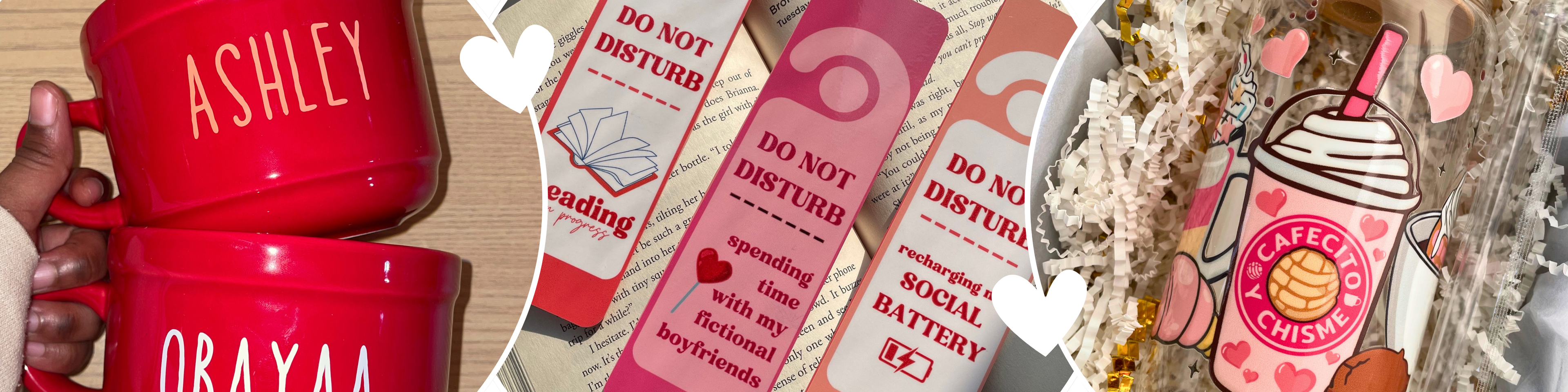
Want a gift that actually shows you know the person? Find the Perfect Personalized Gift for Every Style and Personality. Make your loved ones feel extra special with something made just for them.
-

Just Notebook Sticker Covers | Back to School
Peel & Stick Composition Notebook Covers for all composition notebooks (Target, Walmart,...
-

Notebooks | Back to School
Finished Composition Notebooks made with peel-and-stick notebook covers for all composition notebooks...
-

Graduation Season
Make a statement on your graduation day with our custom graduation stoles,...


Frequently Asked Questions
How do I place an order for a graduation stole?
How do I place an order?
We welcome orders through both online and offline channels (you can also message us to place an order on IG or TikTok). For online orders, you can add your items directly to your shopping cart. If you prefer to place an offline order without a consultation, kindly use our Canva template in the description, share it with us, and email us back at info@beyondbeatifulbyama.com
How can I customize my stole?
I want to make your graduation season as smooth as possible. You can customize your stole through a consultation with me or go the self-service route.
For consultation, we work together to customize and design your stole if you need help or are not sure what you would like on it.
If you choose not to proceed with a consultation and already have a design idea in mind, please use this Canva link to customize your stole using the style you prefer. Once finished, email your completed design link with editor access and your order number in the email subject line to info@beyondbeautifulbyama.com.
What is the difference between Embroidery, Printing, and Sublimation?
Embroidery, printing, and sublimation are three different methods used for decorating apparel. [CURRENTLY, WE ONLY PROVIDE SUBLIMATED STOLES.]
Each method has its own unique characteristics, advantages, and limitations. Here's a brief overview of the differences between embroidery, printing, and sublimation on apparel:
- Embroidery: The process of stitching a design directly onto the fabric using a needle and thread. It creates a weighted, 3D texture.
- Printing: Ink is applied to the surface of the fabric. Screen printing uses stencils, while Direct-to-Garment (DTG) works like an office printer.
- Sublimation: A heat transfer process where ink turns into gas and bonds directly with fabric fibers, becoming part of the material.
In summary, the choice between embroidery, printing, and sublimation depends on factors such as the design complexity, desired look and feel, fabric type, and intended use of the apparel.
Each method has its own advantages and considerations, and the best choice will vary depending on the specific requirements of the project.